What If Your Workday Could End the Moment You Log Off?
You sit at your desk at home, staring at the screen long after "work hours" are supposed to be over. The kitchen calls, your child needs help, but you can’t seem to shut down. Does this feel familiar? You're not alone. Millions struggle to separate work from life when the office is just a room away. But what if video tutorial platforms could help you reclaim your time, energy, and peace? Not by teaching you how to work harder—but by showing you how to work smarter, so you can finally log off with a clear mind and an open heart.
The Invisible Chains of Working from Home
Imagine this: it’s 7:30 p.m., the kids are winding down, and you're still in your home office, replying to one last email. Or maybe you’re at the dinner table, fork in hand, but your eyes keep drifting to your phone every time a notification buzzes. You’re physically present, but mentally, you’re still in the middle of a spreadsheet. This isn’t dedication—it’s emotional bleed. And for so many of us, working from home has turned our living spaces into invisible extensions of the office.
We tell ourselves we’re lucky to have flexibility, and we are. But without clear boundaries, that flexibility becomes a trap. There’s no commute to mark the start and end of the day. No boss walking by to remind you it’s time to go. Instead, the laptop stays open, the inbox stays active, and the mental load never fully lifts. You might finish tasks, but you don’t finish the day.
The emotional toll is real. One mom I spoke to shared how she used to miss her daughter’s bedtime stories because she was “just finishing up a quick report.” Another woman admitted she started dreading Sundays because the night before work always felt like a countdown. This isn’t burnout from overwork alone—it’s burnout from never being allowed to stop. And the worst part? We often blame ourselves. We think we’re not trying hard enough, not being disciplined enough. But the truth is, we weren’t given the tools to transition. We weren’t taught how to close the work chapter and open the life one.
That’s where technology can either hurt or help. Left unchecked, our devices keep us tethered. But used wisely, they can actually set us free. The key isn’t more willpower—it’s smarter systems. And those systems? They’re just a video tutorial away.
How Learning Becomes Liberation (Not Another Task)
Let’s be honest—when someone says, “You should learn something new,” it can feel like another burden. As if your to-do list wasn’t long enough, now you’re supposed to add “self-improvement” on top? But what if learning wasn’t about adding more, but about removing friction? What if watching a 15-minute video could save you two hours every week?
That’s the shift we need to make: from seeing online learning as extra work to seeing it as emotional relief. Think of it like this—every time you learn a new digital habit, you’re not just gaining knowledge. You’re buying back time. You’re investing in peace. And the best part? You don’t need to enroll in a course or earn a certificate. You just need one actionable idea that fits your real life.
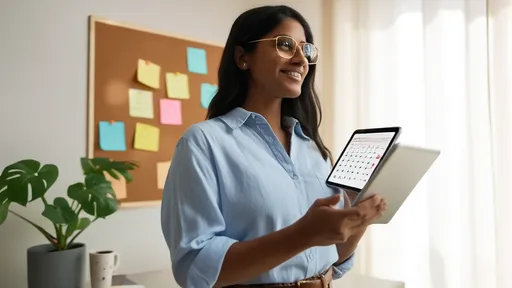
Take Maria, a project manager and mom of two. She used to work until 9 p.m. most nights, stressed and exhausted. Then one evening, she stumbled on a short video about “time-blocking for working parents.” The instructor didn’t talk about hustle or perfection. She showed how to color-code your calendar: blue for deep work, green for family, red for rest. Maria tried it the next day. She blocked out 6 p.m. to 7:30 p.m. as “family time”—no exceptions. And when a last-minute request came in, she didn’t panic. She looked at her calendar and said, “I can get to this tomorrow morning.”
That one change didn’t just protect her evenings—it changed how she felt about work. She wasn’t resisting her job anymore. She wasn’t hiding from her family. She had a system, and it gave her permission to stop. That’s the power of learning done right. It’s not about doing more. It’s about creating space so you can finally breathe.
Finding the Right Tutorials That Fit Real Life
Not all video tutorials are created equal. You’ve probably clicked on a few that promised life-changing results in five minutes—only to find they were full of jargon, unrealistic routines, or influencers showing off their perfectly lit home offices. That kind of content doesn’t help—it makes you feel worse.
The truth is, the best tutorials aren’t the flashiest. They’re the ones that feel like a conversation with someone who’s been in your shoes. They don’t assume you have unlimited time or energy. They don’t tell you to wake up at 5 a.m. or meditate for an hour. Instead, they offer small, doable changes—like how to mute non-urgent Slack channels, or how to write a two-sentence email that prevents follow-up questions.
So how do you find them? Start by asking: does this feel like something I could actually do? If the answer is no, close the tab. Look for instructors who talk about their struggles, not just their wins. One woman shared how she used to answer emails during her son’s soccer games—until she learned to set “focus hours” using a simple calendar trick. Another talked about turning off her work laptop’s Wi-Fi after 6 p.m., so she couldn’t check in “just one more time.”
These aren’t grand transformations. They’re tiny rebellions against the always-on culture. And the best platforms make them easy to find. Use search terms like “how to stop working late,” “set boundaries with email,” or “simple time management for moms.” You’ll find real people sharing real solutions—no gimmicks, no pressure. Just practical help that respects your time and your life.
Building a Routine That Works with Your Life, Not Against It
Here’s a secret: you don’t need a perfect routine to feel in control. You just need one or two habits that anchor your day. And the beauty of video tutorials is that they break big ideas into micro-lessons. You don’t have to overhaul your entire schedule. You just have to start somewhere.
One of the most powerful concepts I’ve seen taught in short videos is “task batching.” The idea is simple: group similar tasks together so you’re not constantly switching gears. For example, instead of answering emails throughout the day, you check them just three times—9 a.m., 1 p.m., and 4 p.m. A five-minute tutorial can show you exactly how to set this up in your email settings or calendar. Another video might teach you “habit stacking”—linking a new habit to one you already do. For instance, after you pour your morning coffee, you spend two minutes planning your top three tasks for the day.
Sarah, a teacher and freelance writer, used to feel scattered. She’d jump from grading papers to writing articles to helping her kids with homework, never fully present in any role. Then she watched a video about “energy mapping”—tracking when you feel most alert and matching your tasks to those times. She realized she was most focused in the early morning, so she started waking up 30 minutes earlier to write. She saved grading for the afternoon, when her energy dipped. It wasn’t a dramatic change, but it made her feel more in sync with herself.
The goal isn’t to become a productivity robot. It’s to design a rhythm that respects your natural energy, your family’s needs, and your personal limits. And the best part? You can test one idea today. Try it for three days. If it works, keep it. If not, try something else. There’s no failure—only learning.
Turning Knowledge into Daily Wins
Here’s the hard truth: watching a video doesn’t change your life. Applying one tip does. That’s why the most effective learners don’t just consume content—they act on it immediately. A simple trick I use—and many others swear by—is the “one-take rule.” After watching a tutorial, I apply one thing before I close the tab. Just one. It could be turning off desktop notifications, scheduling a recurring family dinner reminder, or sending a quick message to my team about my focus hours.
It’s not about doing everything. It’s about building momentum. One small win leads to another. I remember talking to a woman named Lisa who watched a video about “digital sunsets”—a ritual to close your workday. The instructor suggested closing all browser tabs, writing down tomorrow’s top priority, and saying out loud, “Work is done.” Lisa laughed at first. “I felt silly talking to myself,” she said. “But I tried it. And that night, I actually played cards with my kids instead of scrolling through emails.”
That’s the power of action. It turns theory into habit. It turns guilt into grace. And over time, those small actions add up. You start to trust yourself again. You remember that you’re not just a worker—you’re a person with needs, dreams, and relationships that matter just as much.
When the Platform Becomes Your Quiet Coach
Over time, something shifts. The video platform stops being just a place to search for answers. It becomes a quiet companion in your journey. You start looking forward to those 10-minute sessions not because they’re exciting, but because they’re grounding. They remind you that you’re growing. That you’re learning how to protect your time, your energy, and your peace.
It’s like having a coach who never judges, never rushes you, and always shows up when you need them. One woman told me she watches a short video every Sunday night to prepare for the week. It’s not about work tasks—it’s about mindset. One week, it was about saying no without guilt. The next, it was about delegating small tasks instead of doing everything herself. These weren’t breakthroughs in the moment, but over months, she noticed she was less anxious, more present, and more confident in her choices.
The emotional benefits go deeper than time saved. You start to feel more in control. You react less to every message and request. You learn to pause before saying yes. You begin to see yourself not as someone who has to do it all, but as someone who gets to choose what matters. And that shift? That’s where real freedom begins.
Reclaiming More Than Time—Reclaiming Yourself
Let’s picture the end of a better kind of day. The laptop closes. The screen goes dark. You stand up, stretch, and walk into the living room. Your child runs over with a drawing. Your partner smiles and asks if you want to take a walk. You say yes—without checking your phone first.
This is what we’re really after. Not just ending work on time, but being fully there for what comes after. The laughter at dinner. The quiet moment with a book. The hobby you thought you’d lost. These are the things that make life feel rich, meaningful, and yours.
Video tutorial platforms won’t solve everything. But when used with intention, they can be a powerful ally in your journey toward balance. They can teach you how to set boundaries, protect your energy, and design a workday that doesn’t steal from your life. And in doing so, they help you remember who you are beyond your job title.
You’re not just a worker. You’re a mother, a partner, a creative soul, a woman who deserves rest and joy. And every time you choose to log off—not because you’re done with work, but because you’re choosing life—you win. That’s the most valuable lesson of all. And it’s one you can start learning today.