Tracked My Sleep for 365 Nights: The Tiny Device That Changed How I Wake Up Every Morning
You know that groggy, drained feeling even after eight hours in bed? I did—until I started using a simple sleep tracker every single night for a year. It didn’t just record my rest; it quietly revealed patterns I’d ignored for years. No hype, no complex settings—just gentle insights that helped me sleep deeper, wake easier, and feel more like *me* by midday. This is what happened when I stopped guessing and started understanding my sleep. And if you’ve ever woken up wondering why you still feel exhausted, this might be the beginning of your own shift too.
The Morning Struggle That Started It All
For as long as I could remember, my mornings were a battle. I’d set the alarm for 6:30 a.m., hit snooze at 6:38, again at 6:46, and maybe once more just to be sure. By the time I finally dragged myself out of bed, my mind felt like it was wrapped in fog. I’d shuffle to the kitchen, pour a large coffee—sometimes two—and still feel like I was moving through molasses. My daughter would hand me her lunchbox with a hopeful smile and say, “Mom, you look tired,” and I’d laugh it off with a quick, “Just didn’t sleep well, sweetie.” But deep down, I knew it wasn’t just one bad night. It was months—maybe even years—of feeling half-present, half-asleep, even when I was standing right in front of the people I loved most.
It wasn’t that I wasn’t trying. I turned off the lights early. I avoided late-night TV. I even bought one of those fancy pillows that promised “optimal spinal alignment.” But nothing seemed to stick, and nothing changed how I felt when the sun came up. Then came that one Monday morning—nothing special about it, really. The sky was gray, the toast burned, and my son forgot his homework again. But as I stood at the kitchen counter, staring at my reflection in the toaster, it hit me: I couldn’t remember the last time I’d woken up feeling refreshed. Not truly. Not deeply. And that scared me. Because I wasn’t sick. I wasn’t depressed. I was just… tired. And I realized then that maybe the problem wasn’t my effort—it was my understanding. I thought I knew how I slept. But I didn’t. Not really.
That moment became the spark. I wasn’t looking for a miracle. I just wanted answers. I wanted to know why my body wasn’t restoring itself the way it used to. Why my energy dipped by 2 p.m. Why I snapped at small things. Why I felt like I was constantly playing catch-up. And so, with a mix of curiosity and quiet desperation, I decided to stop guessing. I decided to track.
Finding a Sleep Tracker That Felt Like a Friend, Not a Gadget
At first, I thought this would be easy. I downloaded a few apps, tried a smartwatch my sister lent me, and even looked into one of those high-tech mattress pads that claim to analyze your every breath. But here’s what I quickly learned: not all sleep tech is created for real life. The apps asked me to log everything—caffeine, water, mood—and by day three, I was already overwhelmed. The smartwatch buzzed with notifications I didn’t ask for, woke me with “gentle” vibrations that felt anything but, and needed charging every night like another chore on my list. The mattress pad? Too expensive, too complicated, and honestly, a little creepy. I didn’t want to feel monitored. I wanted to feel understood.
Then, by accident, I stumbled on a slim, fabric-covered band that slipped onto my wrist like a soft bracelet. No flashing lights. No beeping. No daily quizzes about my stress levels. It just… worked. I put it on before bed, took it off in the morning, and within a week, it felt like part of my routine—like brushing my teeth or setting the thermostat. The magic wasn’t in the features; it was in the simplicity. It tracked my sleep stages, heart rate, and movement without demanding anything in return. No data entry. No judgment. Just quiet observation. And that made all the difference.
I remember the first time I opened the app and saw my sleep graph. It wasn’t flashy—just gentle curves in blue and green showing light, deep, and REM sleep. But seeing it? That was powerful. For the first time, I wasn’t guessing. I was *knowing*. And the device didn’t scold me for a poor night. It didn’t give me a grade. It just showed me what happened. That lack of pressure—that gentle, patient presence—was exactly what I needed. This wasn’t a drill sergeant. It was more like a wise friend who’d been watching over me, quietly gathering clues so I could finally make sense of my own rhythm.
What My Sleep Data Revealed About My Life
At first, I didn’t know what I was looking for. I just wore the band and checked the app in the morning, curious but skeptical. But after a few weeks, patterns began to emerge—clear, undeniable patterns that I’d been blind to for years. The biggest shock? My deepest sleep—the kind that restores your body and resets your brain—was almost nonexistent on Sunday nights. Every Sunday. Like clockwork. I’d go to bed at a reasonable hour, maybe even earlier than usual, and still end up with less than 40 minutes of deep sleep. How was that possible?
The data didn’t lie. I started looking back at my Sundays. There it was: the frantic grocery run at 7 p.m. The late coffee while folding laundry. The anxious scrolling through work emails “just to stay ahead.” I wasn’t winding down. I was revving up. My body thought it was Monday already, even though the calendar said otherwise. The tracker didn’t care about my intentions. It only recorded what my body experienced. And what it showed was clear: I was setting myself up for failure before the week even began.
Another revelation? My so-called “good” eight-hour nights weren’t as good as I thought. The tracker showed that I was waking up three, sometimes four times a night—briefly, just enough to stir, but not enough to remember. Yet each interruption pulled me out of deep sleep, fragmenting my rest and leaving me groggy in the morning. I’d always thought, “I slept eight hours, so I should feel fine.” But the data said otherwise. Quantity wasn’t the issue. Quality was.
And then there were the connections I never expected. On nights when I ate dinner after 8 p.m., my deep sleep dropped by nearly 25%. When I skipped my evening walk, my REM sleep—the stage tied to mood and memory—suffered. Even family movie nights had an impact: watching something intense or stressful after 9 p.m. made it harder for my body to settle. The tracker didn’t tell me to change any of this. It just showed me the cost. And once I saw it, I couldn’t unsee it.
Small Changes, Big Shifts in Energy and Mood
Here’s the thing I didn’t expect: once I had the data, I didn’t feel overwhelmed. I felt empowered. I wasn’t looking to overhaul my life. I just wanted to make a few small, informed tweaks—like adjusting the sails on a boat already moving forward. So I started with Sundays. I set a “no screens after 8 p.m.” rule for myself. I swapped my late coffee for decaf herbal tea. I began winding down with a book instead of my phone. And I moved dinner up by 45 minutes, even if it meant eating before the kids got home from soccer. These weren’t rigid rules. They were experiments. And within two weeks, my Sunday deep sleep doubled.
That was the first real “aha” moment. I remember waking up one Monday morning and realizing—I hadn’t hit snooze. Not once. I opened my eyes, felt the sunlight on my face, and just… got up. No dread. No fog. Just a quiet sense of readiness. My husband noticed first. “You seem different,” he said over breakfast. “Lighter. Like you’re actually here.” My daughter hugged me and whispered, “You’re laughing more, Mom.” And she was right. I was.
So I kept going. I started paying attention to how much water I drank in the evening—if I had too much, I’d wake up to use the bathroom. I noticed that walking after dinner, even just for 15 minutes, helped me fall asleep faster. I experimented with lowering the lights an hour before bed, and my body seemed to respond like it had been waiting for the cue. None of these changes were drastic. But together? They added up. Over the next few months, my average deep sleep increased by nearly 30%. My nighttime awakenings dropped from four to one or two. And on most days, I woke up before the alarm, feeling not just rested, but ready.
It wasn’t perfection. Some nights were still rough. But now, instead of blaming myself, I could look at the data and say, “Ah, right—late dinner, stressful call with my mom, skipped my walk.” No guilt. Just understanding. And that made it easier to get back on track the next night.
How Tracking Strengthened My Family Routines
One of the most beautiful surprises of this journey was how it rippled through my family. I didn’t set out to change anyone else’s habits. But when they saw how much better I felt, they started asking questions. “Why are you reading in bed instead of scrolling?” my son asked one night. So I showed him the data—how screen time before bed made it harder for me to fall asleep. He listened, thought about it, and the next week, he started reading before bed too.
Then came the “quiet hour.” I began dimming the lights in the house at 8:30 p.m., playing soft music, and putting my phone away. My daughter started doing the same. My husband, who used to watch the news until midnight, began joining us for a cup of tea and a few minutes of quiet conversation. We didn’t make a big deal out of it. We didn’t call it a rule. But slowly, it became our rhythm. Our home felt calmer. The energy shifted. Even our dog seemed to settle faster.
What started as a personal experiment became a shared practice. We didn’t all wear sleep trackers—though my son recently asked for one for his birthday—but we began to honor rest as something valuable, not something to sacrifice. We stopped glorifying “busy” and started protecting “calm.” And in that space, we found more connection. More laughter. More presence. I realized then that better sleep wasn’t just about me. It was about the quality of the time I had with the people I love.
Staying Consistent Without Obsession
Let’s be real—there were days I forgot to wear the tracker. Nights I left it on the charger. Mornings I was too rushed to check the app. And you know what? That was okay. The beauty of this device was that it didn’t punish me for missing a night. It didn’t give me a lower average or send me a guilt-trip notification. When I put it back on, it simply started again. No judgment. No pressure. Just continuity.
I made a rule for myself early on: this wasn’t about chasing perfect scores. It was about awareness. Some nights, my sleep was still fragmented. But instead of feeling like a failure, I’d think, “Okay, what happened?” Maybe I ate too late. Maybe I was anxious about a work deadline. Maybe the house was too warm. The data helped me learn, not criticize. And over time, I stopped needing the tracker to tell me how I’d slept. My body began to speak louder. I could feel when I’d eaten too late. I could sense when I needed to slow down. The device didn’t replace my intuition—it sharpened it.
There were moments, of course, when I worried about becoming too attached to the numbers. I’d see a low deep sleep score and feel a twinge of anxiety. But I learned to step back and ask: “Does this reflect how I feel?” If I woke up refreshed, I didn’t let a slightly lower number ruin my day. If I felt tired, I used the data to guide my choices—not to spiral. This balance—using tech as a tool, not a ruler—was the key to making it last. A year later, the tracker isn’t a chore. It’s a quiet companion, like a nightlight in the hallway—there when I need it, unnoticed when I don’t.
Why One Year of Tracking Was Worth Every Night
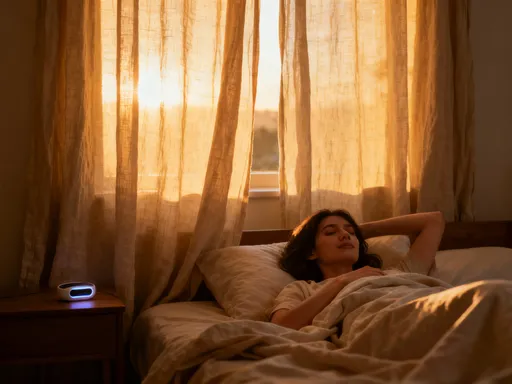
Today, I wake up most mornings before the alarm. Not every day—life still happens. But more often than not, my eyes open naturally, and I feel… ready. Not rushed. Not drained. Just present. The change didn’t come overnight. It grew slowly, like a plant finally getting the right amount of light and water. And while the tracker didn’t “fix” me—it didn’t wave a magic wand and erase years of poor habits—it did something even more valuable. It helped me understand myself.
That year of data taught me to listen—to my body, to my rhythms, to the quiet signals I’d been ignoring for so long. It showed me that rest isn’t a luxury. It’s the foundation. It’s what allows me to show up as the mom, the partner, the friend I want to be. When I sleep well, I’m more patient. I’m more creative. I’m more *me*. And that has changed everything.
Looking back, I realize this wasn’t just about sleep. It was about self-care. About paying attention. About giving myself the same kindness and attention I give so freely to others. The tiny device on my wrist didn’t give me more time. But it helped me make the time I have richer, deeper, and more meaningful. And if you’re reading this, wondering if tracking could help you—if you’re tired of feeling tired—my answer is simple: try it. Not to chase perfection. Not to meet some ideal. But to know yourself a little better. Because sometimes, the smallest change—like wearing a simple band to bed—can lead to the biggest shift in how you live your days.