I Never Thought an App Could Make Weekends Safer for My Family—Until This One Did
It started with a simple worry: my kids running ahead at the park, my parents visiting unfamiliar neighborhoods, and that nagging voice in my head asking, Are they really okay? Then I tried a skill-learning app—not for languages or coding, but for real-life safety awareness. What surprised me wasn’t just how easy it was to learn, but how much more confident we all felt by Sunday night. This isn’t about fear. It’s about peace of mind—and how a little tech, used the right way, can bring a family closer together.
The Weekend Anxiety No One Talks About
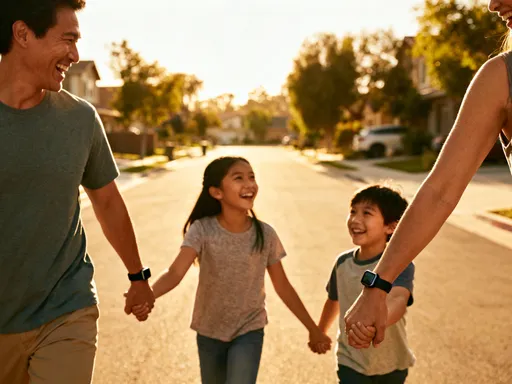
Weekends are supposed to be light, full of laughter and slow mornings with coffee, sticky fingers from pancakes, and the kind of easy joy that sticks with you for days. We plan hikes, pack picnic baskets, and drive to farmers’ markets with the windows down and music playing. But beneath all that happiness, there’s a quiet hum of worry that so many of us carry—and rarely talk about. You’re watching your child dart toward the playground, backpack bouncing, and suddenly your breath catches. What if they get lost? What if no one notices? You’re helping your aging mom out of the car in a busy parking lot and wonder—what if she feels dizzy and can’t find me? These thoughts don’t come from fear-mongering headlines or rare tragedies. They come from love. From caring so deeply that the idea of being unprepared—even for a small moment—feels unbearable.
And it’s not just about children or older parents. Sometimes, it’s you. You’re walking back to your car after a long day at a crowded outdoor festival, phone battery dead, and the path feels dimmer than it should. Or your teenager is meeting friends downtown, and you remind yourself—again—not to text too much, not to seem overbearing. We’ve all been trained to believe that worrying is part of parenting, part of caregiving. But what if instead of carrying that weight alone, we could share it? What if we could replace that low-level anxiety with something stronger—confidence, preparedness, connection? That’s where technology, when used thoughtfully, can step in not as a distraction, but as a quiet ally.
How a Learning App Became Our Weekend Safety Coach
I didn’t set out to download a safety app. In fact, I’d avoided anything that felt like 'survival training' or emergency prep. It all seemed too intense, too alarmist. But then a friend mentioned she’d been using a learning app with her kids—not for math or spelling, but for real-world skills like what to do if someone feels unwell in public, or how to describe your location clearly during a call for help. I was skeptical. Could a few minutes on a phone really make a difference? But I downloaded it anyway, mostly out of curiosity.
What I found was nothing like the dry, lecture-style videos I expected. Instead, the app felt like a friendly guide, offering short, engaging activities that fit naturally into our weekend rhythm. One morning, over scrambled eggs and juice, my kids and I played a quick game called “Who’s a Helper?” where we tapped pictures of people who could assist in different situations—a store employee, a police officer, a parent with a stroller. Another day, during a car ride to a nearby trail, we listened to a two-minute audio lesson on how to stay calm and speak clearly if calling 911. The tone wasn’t scary or urgent. It was practical, warm, and empowering.
What made it work was that it didn’t feel like a lesson forced on the kids. It felt like something we were discovering together. My daughter started asking, “Can we do another safety thing today?” My son began role-playing what he’d say if he got separated from us at a zoo. The app wasn’t replacing my role as a parent. It wasn’t turning my family into mini first responders. It was simply giving us tools—small, simple, but powerful—that helped us feel more in control, even when life felt unpredictable.
Turning Knowledge into Family Habits
Here’s what I’ve learned: information fades. But habits stick. And the real magic of this app wasn’t just in the lessons—it was in how it helped us turn those lessons into everyday actions. After one session on location sharing, we made a new rule: before anyone splits up in a large space—like a mall, festival, or amusement park—we check in with each other using our phones. Not in a frantic way, but calmly. “I’m heading to the toy store—meet you at the fountain in 20?” That small habit didn’t come from fear. It came from feeling equipped.
The app supported this with gentle nudges and small rewards. After completing a few lessons, we’d unlock a “Safety Star” badge. My kids loved collecting them. One weekend, after practicing what to do if someone feels unwell, we earned a “Helper Hero” badge and celebrated with extra time at the park. These weren’t big gestures, but they made learning feel positive, something to look forward to, not dread. Over time, the behaviors became natural. My daughter now automatically looks for an adult in a uniform if she feels unsure. My husband and I have started using voice memos to quickly share our location when running errands separately. We’re not perfect. We still forget sometimes. But the difference is that now, when something happens, we have a shared language, a plan, and the confidence to act.
When the Skills Actually Saved the Day
It happened on a Saturday morning at a bustling farmers’ market. We were walking through the rows of fresh produce, stopping to smell herbs and sample honey, when I turned around and realized my seven-year-old was gone. My stomach dropped. I called her name. No answer. For a split second, panic rose—then my phone buzzed. It was an alert from the app: “Location update: Emma is near the flower stand.” I ran toward it, heart pounding, and found her standing exactly where the app said, next to a vendor with bright sunflowers. She wasn’t crying. She wasn’t scared. She looked up and said, “I remembered. I stayed put and found a helper.”
That moment changed everything for me. It wasn’t just that the technology helped me find her. It was that she knew what to do. She didn’t run. She didn’t hide. She followed the steps we’d practiced—stay in place, look for a trusted adult, and say her name clearly. The vendor, a kind woman with dirt on her hands, smiled and said, “She told me exactly who to call.” I hugged my daughter tightly, tears in my eyes, not from fear, but from pride.
This wasn’t a life-or-death emergency. But it was real. And it proved that small, consistent learning—supported by simple tech—can make a real difference. The app didn’t create fear. It built confidence. It didn’t make us paranoid. It made us prepared. And in that moment, I realized that the goal wasn’t to prevent every possible problem. It was to make sure that when small moments of uncertainty happen—as they do in every family—we’re ready to handle them with calm, not chaos.
Learning Together Strengthened Our Connection
Before this app, our weekends were full of doing—going here, seeing that, eating out, rushing to the next activity. Now, they’re also about growing. We still enjoy the same outings, but there’s a new layer: we talk more. We ask each other questions. “What would you do if…?” has become a regular part of our breakfast conversations. And surprisingly, even my teenager—who usually disappears into his headphones the second he wakes up—has started joining in. One Sunday, he looked up from his phone and said, “Hey, what are we learning this weekend?”
That question meant more than he knew. Because what we’re really doing isn’t just preparing for emergencies. We’re building trust. We’re showing each other that we care enough to pay attention, to practice, to be there. When my parents came to visit last month, we even did a short lesson together on how to recognize signs of heat exhaustion—something useful for their afternoon walk. They laughed at first, calling it “homework,” but later, my mom told me she felt more confident walking in the sun, knowing what to watch for.
These moments have become small rituals of care. We’re not just a family who shares meals and vacations. We’re a team. We look out for each other. And that sense of unity—that we’re in this together—has deepened in ways I didn’t expect. The app didn’t create that bond. But it gave us a reason to strengthen it. It turned safety from a silent worry into a shared mission, something we build together, one small lesson at a time.
Why This Isn’t Just Another Screen-Time Guilt Trip
I know what you’re thinking. Another app? More screen time? As a mom, I’ve felt that guilt too. We worry about our kids spending too much time on devices, about losing those face-to-face moments, about technology pulling us apart instead of bringing us together. I used to see apps as the enemy of real connection. But this one flipped the script. It didn’t take time away from us. It gave us back something more valuable: peace of mind.
The lessons are short—usually under five minutes. We do them while waiting for pancakes to cook, during a car ride, or while folding laundry. It’s not about hours of scrolling or intense training. It’s about using a few minutes wisely. And because we do it together, it doesn’t feel like screen time at all. It feels like learning. Like playing a game. Like talking.
Plus, the app is designed to encourage real-world action. After a lesson on emergency communication, it prompts us to practice saying our address out loud. After learning about weather safety, it suggests we check the forecast before heading out. The screen becomes a doorway, not a wall. It leads us back into the world, more aware, more ready. So no, this isn’t about adding more digital noise to our lives. It’s about choosing tech that serves us—tech that helps us feel safer, more connected, and more present in the moments that matter.
Making Safety Part of Your Family’s Rhythm
If you’re reading this and thinking, That sounds nice, but my family will never go for it, I get it. You don’t need to start big. You don’t need to overhaul your weekends or turn your home into a safety boot camp. Just begin. Try one lesson. Pick a quiet morning and play a five-minute game together. See how it feels. Maybe start with something simple, like practicing how to call for help using calm, clear words. Or talk about who the “helpers” are in your neighborhood. The goal isn’t perfection. It’s progress. It’s creating a culture where awareness and care are part of everyday life.
Think of it like brushing your teeth. You don’t do it because you’re afraid of every possible cavity. You do it because it’s a small habit that protects your health over time. Safety skills are the same. A few minutes of learning each week can build confidence that lasts a lifetime. And the beauty is, it doesn’t have to be serious or stressful. It can be light. It can be fun. It can be something your kids ask for, just like dessert or a bedtime story.
Over the past months, I’ve watched my family change in quiet but meaningful ways. We’re more aware. We’re more connected. We’re not living in fear—we’re living with confidence. And that shift didn’t come from a single dramatic moment. It came from small, shared choices. From learning together. From using technology not to escape life, but to live it more fully. So if you’ve ever felt that whisper of worry on a busy weekend, know this: you’re not alone. And you don’t have to carry it alone. Sometimes, the right app—used the right way—can help you turn that worry into something stronger: peace, preparedness, and the quiet joy of knowing your family is a little safer, a little closer, and a lot more ready for whatever comes next.